
Let’s get something straight. Kitchens?
They’ve been treated like second-class citizens in the world of “home style” for way too long. The living room gets the plush throws, the books stacked just-so on the coffee table, the decorative tchotchkes nobody touches. Meanwhile, the kitchen—the beating heart of a home, the room where life actually happens—sits there saddled with sterile cabinets and a toaster that looks like it came straight from a Best Buy clearance aisle.
But people are waking up. Maybe it’s because Instagram finally got tired of beige sofas and turned its lens toward open shelving. Maybe it’s because cooking has become the new national sport (half the country seems to think they’re auditioning for Top Chef). Whatever the reason, kitchens are finally being treated for what they are: equal parts functional battlefield and personal art gallery.
And if you think that means you need to head straight for some overpriced “farmhouse chic” section at Crate & Barrel, you’re missing the fun. The secret weapon? Thrift stores. Flea markets. Junk shops that smell faintly of dust and old books.
That’s where the magic lives. That’s where you find things that don’t just store your stuff, they say something. About you. About your taste. About the fact you don’t want the same IKEA shelving setup your neighbor has.
So here it is—ten thrift store finds that can take your kitchen storage from flat and boring to a space with personality. A space with bite.
Thrifted Kitchen Tour:
1. Candlesticks
You know what’s funny? People always associate candlesticks with the dining table, or worse—mantelpieces in some Victorian drama. But in the kitchen? That’s where they actually shine.
Walk into any thrift store and I guarantee you’ll see a graveyard of candlesticks shoved on some back shelf. Brass, silver-plated, ceramic, even clunky glass ones from the 80s. Pick them up. Buy them. Polish them or leave them tarnished. Doesn’t matter.
Stick a couple on open shelving and suddenly the space doesn’t look like storage—it looks like a still life. A lived-in painting. Interior designer Max Rollitt calls them “an opportunity to add texture and contrast.” Translation: candlesticks do more than hold wax—they hold attention.
2. French Confit Pots
Now we’re talking about real charm. Not “Target-vintage” charm, but the kind you can only get from a French farmhouse 200 years ago. These confit pots—half-glazed, half-earthy—used to store duck legs and pork fat. Today? They’re utensil holders, planters, or just plain art.
Susannah Cameron, a collector who probably knows more about confit pots than most of us know about our own families, says each one carries “the subtle marks of the potter’s hand.” Translation: every pot is imperfect, and that imperfection is the point.
The kicker? You can usually score one for under twenty bucks. That’s less than a sad Starbucks order and a pastry you didn’t really need.
3. Copper Kettles, Pots & Utensils
Copper is to kitchens what leather is to shoes—it never really goes out of style, it just gets better with age. And thrift stores are littered with the stuff: old kettles, jelly molds, utensils that look like they’ve seen three generations of Sunday roasts.
Hang them from a rail above the stove. Line them up on a shelf. Put them wherever people can see them, because copper is less about utility these days and more about theater. Rebecca Hughes, another interior designer, says these old trinkets bring a “warm and cozy feel.” Sure, that’s true. But let’s be real—they also make you look like someone who actually knows how to cook, even if the most you’ve managed this week is spaghetti with jarred sauce.
4. Vases, Jugs & Bottles
Here’s where people get practical and decorative. Vases and jugs are everywhere in thrift stores. They’re cheap. They’re plentiful. And they do double duty.
Fresh flowers? Stick ’em in. Cold water for dinner? Pour from one of those old stoneware flagons or vintage milk bottles. I’ve even seen people turn canning jars into storage for pasta, beans, or—God forbid—buttons.
The real trick: mix them. Don’t just do one type of vase. Throw in some ginger beer bottles, a fat ceramic jug, a couple of tall glass bottles. Suddenly, you’ve got depth.
5. Curios & Statues
This is where things get fun—and a little weird. Most people walk right past the oddball items at thrift shops. The ceramic dog. The miniature bust of Beethoven. The creepy porcelain clown.
But stop. Think. That dog statue? Interior designer Nicky Mudie literally has one in her kitchen named “Onion.” It sits in the corner, doing absolutely nothing—and yet it’s the thing everyone remembers.
Not ready to commit to a life-size hound? Fine. Start small. A figurine here, a statue there. It’s playful. It’s unexpected. And frankly, it’s what separates your kitchen from every other “Pinterest kitchen” with subway tile and nothing else.
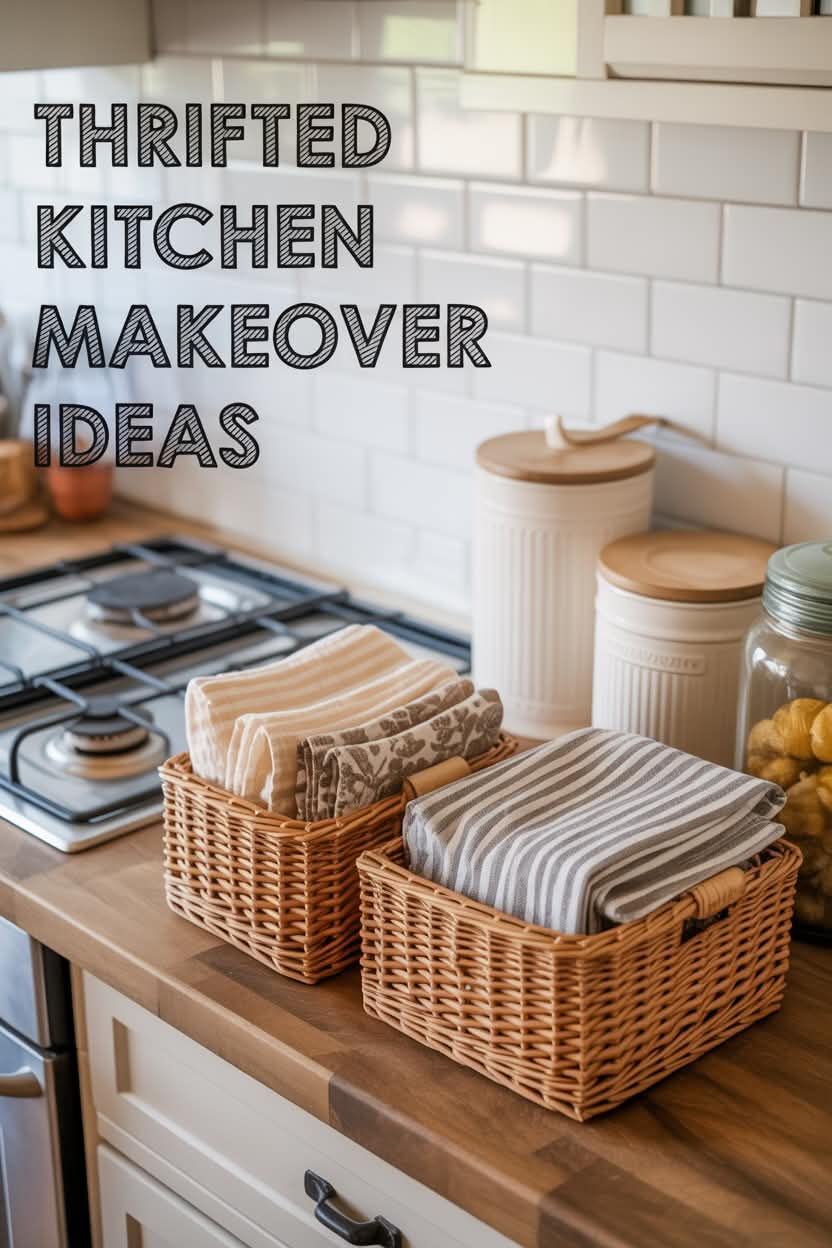
6. Baskets
If you don’t already own at least three thrifted baskets, what are you doing with your life? They’re everywhere. Big, small, woven, broken. And they’re useful as hell.
Fruit? Toss it in a basket. Potatoes? Basket. Random junk mail you don’t want to look at but also don’t want to throw away yet? Basket.
Rebecca Hughes suggests mixing baskets from different eras. One rustic, one a little more polished. She says it makes the home feel like it “organically evolved.” I’d put it this way: it makes it look like you didn’t just walk into a HomeGoods last Saturday and buy six identical “decorative bins.”
7. Aged Wooden Furniture
Not everything has to fit inside a cabinet. Sometimes you need a piece that changes the whole flow of the room. That’s where aged wooden furniture comes in.
A small stool. A butcher block table. Even a rickety old cupboard. These pieces don’t just hold stuff—they anchor a room. They give it history. Max Rollitt says they “break up the line of modernity.” And isn’t that what we’re after here? A kitchen that doesn’t look like it was dropped out of an IKEA box set last Tuesday.
8. Glass & Crystal
Here’s the tragedy: people walk right past thrift store glassware like it’s invisible. Fifty-cent goblets, cut crystal tumblers, colored glass dessert dishes. Nobody wants them because they don’t match.
But that’s the beauty. Line them up inside a glass-front cabinet. Mix heights. Mix colors. Mix eras. Suddenly, you’ve got something that looks curated, not cobbled.
And yes, cut crystal might remind you of your grandmother’s house. Good. That’s called nostalgia, and it works.
9. Artwork
Don’t roll your eyes. Yes, thrift store art is mostly dogs playing poker and water-stained landscapes. But here’s the secret: it doesn’t matter. Buy the frame if nothing else. Put a cheap print inside it later.
Or lean into the kitsch. Stick that bad seascape above your coffee station. Create a gallery wall in a corner of your kitchen. Suddenly, the most utilitarian room in your house has soul.
I’ve even seen people use small canvases to hide cords and ugly outlets. Genius.
10. Wooden Trays & Chopping Blocks
This one’s simple. Wooden trays, butcher blocks, cutting boards—they age like whiskey. A little warped? All the better.
Rebecca Hughes says even a battered board “authentically adds character.” I say it adds grit. It makes the kitchen look like someone actually chops things in there instead of just unboxing DoorDash every night.
Stack them. Lean them against your backsplash. Use them. Don’t baby them.
So Where Do You Find This Stuff?
The short answer: everywhere. The long answer: it depends how much you want to spend.
- Thrift Stores & Flea Markets → The real bargains. You might have to dig through mountains of junk, but that’s half the fun.
- Online → Chairish, Etsy, eBay, and the always-weird Facebook Marketplace. Sometimes overpriced, sometimes jackpot.
- Antique Dealers → If you’ve got cash to burn, 1stDibs will happily take it off your hands.
But here’s the truth: the best finds aren’t the ones you hunt for. They’re the ones that find you. That chipped pitcher you didn’t expect to love. That basket with the broken handle. That bizarre figurine named Onion.
Because at the end of the day, your kitchen shouldn’t look like a catalog. It should look like a story. Your story. And nothing tells a story better than second-hand stuff that’s already lived one.