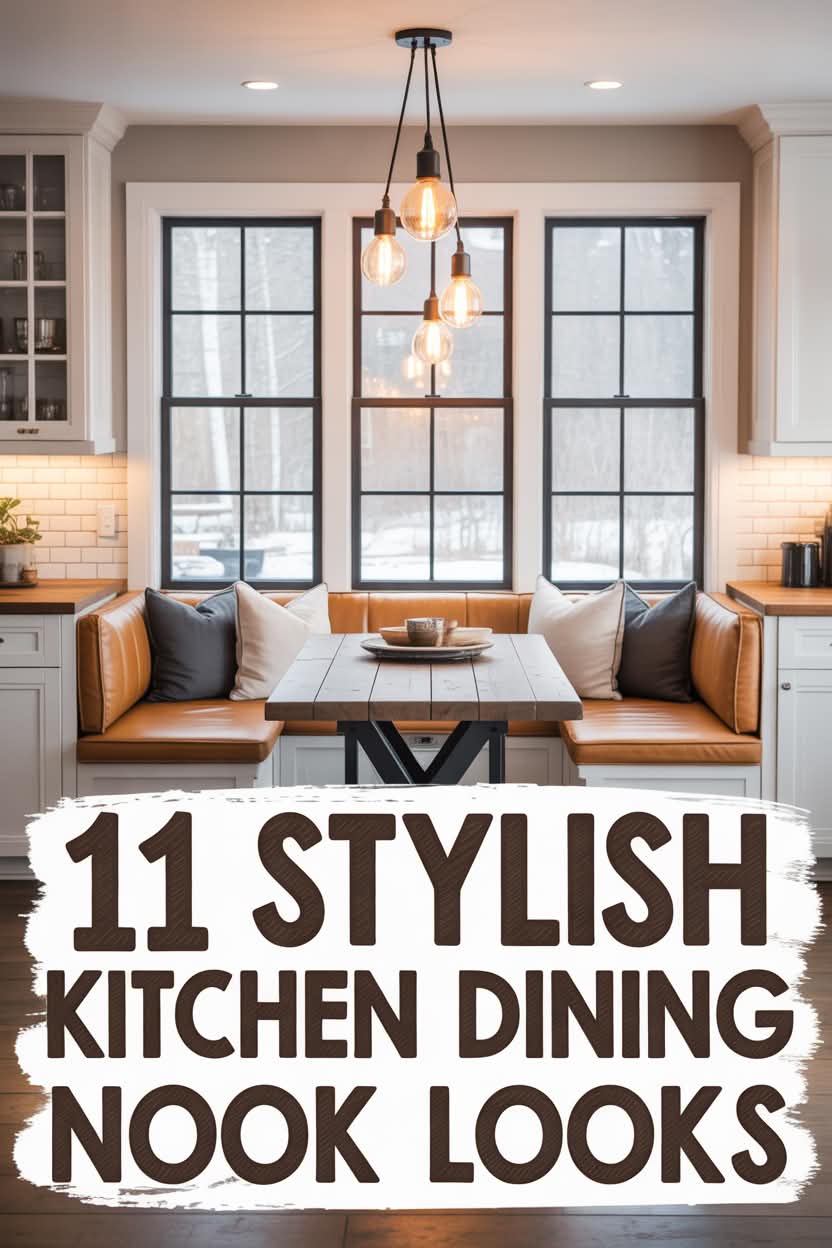

Let’s be honest. Kitchens have been over-analyzed to death. Subway tiles, shaker cabinets, stainless steel appliances—it’s the same Instagram carousel playing on loop. But you know what still makes people perk up, lean in, and—dare I say—actually use the kitchen instead of just passing through? The nook.
That’s right. The kitchen nook. Call it a banquette, call it booth seating, call it that weird corner you finally made useful. Doesn’t matter. A nook transforms a kitchen from “functional food-prep zone” into “this is where we live, laugh, and spill our coffee.”
A nook isn’t just seating. It’s the kitchen’s secret weapon. Think about a diner booth. You slide in, you stay. Hours pass. Refills keep coming. Same thing at home. It invites lingering. Reading the Sunday paper. Endless cups of coffee. Long conversations that somehow end with somebody confessing a big secret.
And the design possibilities? Endless. Bold, calm, modern, retro, rustic—it all works if you do it with intent. So here are 21 ideas—pulled from real kitchens, not just mood boards—that show how you can give your nook personality, charm, and frankly, a reason for existing.
Kitchen Dining Nook Ideas:
1. The Bold & Patterned Banquette
Interior designer Lonika Chande took a Chelsea pied-à-terre and turned its tiny kitchen into a design playground. Think: custom cabinetry, playful color, textiles with a pulse instead of a yawn. The nook’s banquette is drenched in fabric from Flora Soames, and the walls carry a custom shade of “sludgy green.” Not for everyone, sure. But memorable beats forgettable every time.
2. Vintage Meets Modern Mash-Up
Henri Fitzwilliam-Lay did the thing most of us don’t dare: mixed vintage with high-street. The nook here has built-in seating wrapped around a vintage table from Pamono. Chairs? Straight out of West Elm. The pendant light from Hector Finch pulls it all together. Proof that you don’t have to choose sides—modern and vintage can shake hands just fine.
3. Buy the Bench, Skip the Carpenter
Not every nook needs to be built in. Studio Duggan proves it with a Chelsea house where the seating came straight from the shop floor. Banquette-style bench, bright upholstery, and—voila—a nook without the construction dust. Retail pick? The Stafford model from OKA, available in multiple colors if you don’t want to commit to custom.
4. Island Hitchhiker Nook
Salvesen Graham took a flat in Mayfair with zero space for a proper table and pulled off a trick: anchoring a cushioned bench to the back of the kitchen island. Suddenly, what looked like wasted real estate turned into full-on nook territory. That’s ingenuity—making room where none existed.
5. Floating Bench, Airy Vibes
In an Edwardian villa, William Smalley decided that “nook” doesn’t have to mean “bulky.” His floating bench—literally attached to the wall—keeps the space modern and light. Paired with dining furniture in matching tones, the whole thing feels calm, controlled, and uncluttered. Minimalists, this one’s for you.
6. Bay Window = Built-in Goldmine
If you’ve got a bay window, congratulations. You’ve already got the perfect nook spot—you just need the bench. Matilda Goad lined hers with seating and paired it with iconic furniture: a Saarinen Tulip table and Gio Ponti’s Superleggera chairs. Slim, sleek, and airy—classic midcentury brilliance that doesn’t weigh the space down.
7. Seamless Cabinet-to-Bench Trick
Pandora Taylor pulled a neat move in Herne Hill: she extended the kitchen cabinetry into a built-in banquette. Painted it the same tone as the windows, too. Suddenly, the nook felt like a separate little “room” without walls—practical, cozy, but still connected.
8. Plates, Pendants & Playfulness
Designer Billy Cotton gave his nook a dose of fun. Picture a light-filled corner, rush matting underfoot, bamboo blinds, and—yes—a gingham tablecloth. Plates line the walls, Soane pendant lights hover above, and the nook feels more like a charming country inn than a city kitchen. Lighthearted, yes, but grown-up enough to keep.
9. Retro Upholstery
Australian designer Tamsin Johnson upholstered her sister’s nook bench in Ralph Lauren fabric that screams retro. Add in photographs by Bill Henson and vintage dining furniture, and you’ve got a nook with layers—arty, a bit nostalgic, but still warm enough to invite daily use.
10. Window-Worshiping Layout
Fashion designer Morgane Sézalory knows the value of daylight. In her Paris flat, she shoved the nook as close to the window as possible. Winter light? Weak. Summer light? Divine. Her curvy custom bench wraps around a vintage travertine pedestal table, with Bruno Rey chairs and embroidered floral cushions to soften the edges.
11. Under the Roof Light Glow
Honor Devereux took advantage of natural overhead light and built a nook with banquette seating upholstered in Christopher Farr fabric. Across the table? Vintage Carimate chairs by Vico Magistretti. Rug? Etsy find. Wall lights? From Mullan. A mash-up, but in perfect harmony.
12. Minimal but Cozy
Henry Prideaux in Bermondsey kept his nook quiet. Comfortable, restrained, no bells and whistles. Sometimes restraint is the flex. It says, “Yeah, I could have overdesigned this, but I didn’t need to.”
13. Neon Diner Throwback
Jos and Annabel White in New York’s West Village decided their nook would be… a diner booth. Green banquette. Neon sign. Done. It’s playful, nostalgic, and shockingly functional—they eat lunch in the nook, dinner at the big table. That’s a space that earns its keep.
14. Mirror Illusion Trick
Edoardo Mapelli Mozzi (yes, the property developer married to Princess Beatrice) used a mezzanine flat wall to carve out nook space. Mustard velvet upholstery plus a full wall of mirror glass = space that feels twice as big, twice as glamorous.
15. Salvaged Church Pews
Patrick Williams salvaged pews from a yard and slapped them into his kitchen as nook seating. Rustic. Unexpected. Slightly irreverent. And it works. The kind of nook that makes guests say, “Wait, are those church pews?” Yes, yes they are.
16. The Perch for Party Guests
Lucy Williams didn’t want a formal nook, but she wanted somewhere guests could lounge while she played host. Solution? A long built-in seat along the wall. Not technically a nook, but functionally the same. Drink in hand, gossip in progress—mission accomplished.
17. Banquettes for the Big Table
At a Notting Hill house, Barlow & Barlow built banquettes into a long dining setup designed by Herringbone Kitchens. It’s the hybrid move: formal dining table, informal banquette seating. Great for kids, parties, and nights where chairs just feel too stiff.
18. Light & Plant-Friendly
Jason Ingram photographed a nook practically glowing with greenery. Light pours in, plants thrive, and the nook becomes a living greenhouse-meets-breakfast spot. (Side note: if your nook doesn’t get light, don’t try this. Nothing looks sadder than a dead fern.)
19. Rustic Salvage Meets Modern Flat
Patrick Williams (yes, he pops up again) used salvaged pews in another project. Rustic charm inside a modern flat = instant conversation starter. A little roughness in an otherwise polished kitchen is exactly what keeps it interesting.
20. Long Bench Lounge
Sometimes, less “nook” and more “lounge bench” is the right move. Picture guests leaning back, drink in hand, watching the host whirl through the kitchen. That’s what Lucy Williams designed—a long seat built for hanging out, not just eating.
21. Button-Back Banquette Drama
Last but not least, Banda’s design with mustard velvet upholstery, mirrors, and button-back banquette seating. Classic meets glamorous. A nook that’s not just for breakfast—it’s for champagne at midnight, too.
Why Nooks Matter (And Why You’ll Regret Skipping One)
Here’s the deal: a nook does more than seat people. It creates rhythm in the kitchen. It softens the edges of an otherwise cold, hard, functional room. It gives structure, but also encourages spontaneity.
And let’s be brutally honest—chairs are boring. Everyone has chairs. But a nook? That’s commitment. That’s saying, “This kitchen isn’t just for cooking. It’s for living.”
So whether you go full diner with neon, or refined Edwardian with floating benches, or just shove a secondhand bench against the wall and call it done—the point is, you made space for people to gather. And that’s the whole game.