Build your dream backyard fire pit—without blowing the budget. Discover 26 DIY fire pit ideas with costs, skill levels, build times, safety tips, and upgrade suggestions. From pavers and salvaged brick to metal, concrete, and tabletop bowls, there’s a design for every yard.
Read This First: Safety, Siting, and Permits (Quick but Important)
Before you grab blocks and marshmallows:
- Check local rules. Some cities/HOAs require permits or ban open burns or wood fires. Many specify setbacks (often 10–25 ft from structures, trees, or fences).
- Choose a safe spot. Level ground, away from roof overhangs and low branches. Keep a 3–6 ft non-combustible safety zone around the pit (gravel, pavers, or bare soil).
- Mind the base. For in-ground or block pits, line with fire brick or use a steel fire ring to protect masonry from spalling.
- Have a plan to extinguish. Keep a bucket of water, hose, or sand, and a metal lid/spark screen handy.
- Fuel matters. Dry, seasoned hardwood = cleaner burn. Skip treated lumber, plywood, pallets, glossy paper, or trash.
- Respect burn bans & wind. Don’t light up on gusty days. Aim for under 15 mph winds.
Your Minimal DIY Fire Pit Toolkit
- Shovel, tamper, level, rubber mallet
- Measuring tape, string, stakes, marking paint
- Work gloves, safety glasses, dust mask
- Wheelbarrow, buckets
- Angle grinder/metal file (for metal builds)
- Masonry saw (optional, for fancy cuts)
Budget Snapshot (Typical Ranges)
- Ultra-budget / repurposed: $0–$60
- Paver/retaining wall builds: $50–$200
- Concrete projects: $80–$400
- Metal DIY: $25–$250
- Kits: $200–$600+ (fastest, most beginner-friendly)
The Ideas—Expanded With Real-World Tips
Each idea includes skill level, approx. cost, time, good for, plus pro tips and upgrades so readers can tailor the build.
01) Easy Above-Ground Paver Pit (No Mortar)
Skill: Beginner • Cost: ~$50–$120 • Time: 2–3 hrs • Good for: First build, renters
- Stack retaining wall blocks in a ring over a compacted sand/gravel base. No mortar, no fuss.
- Pro tip: Use a steel fire ring to protect blocks and maintain perfect roundness.
- Upgrade: Add a second outer ring as a seat ledge; fill the gap with pea gravel or glass beads.
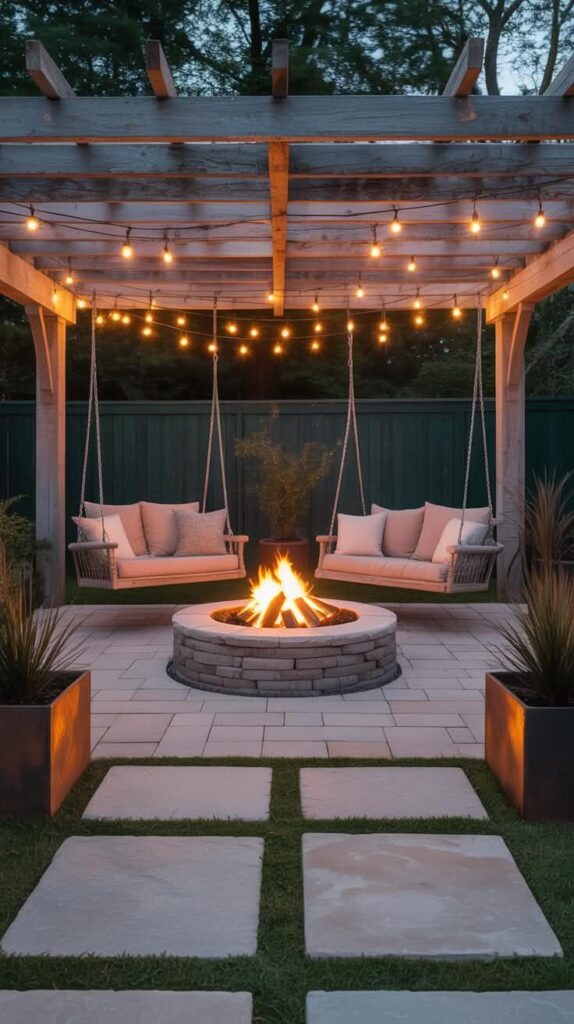
02) Curved Bench + Pit Combo
Skill: Intermediate • Cost: $120–$300 • Time: Weekend • Good for: Small yards, social seating
- Build a curved bench that echoes the pit shape—small footprint, big atmosphere.
- Pro tip: Use pressure-treated lumber or composite and anchor posts in gravel or concrete.
- Upgrade: Include hidden storage for blankets/kindling under the bench.
03) Whitewashed Concrete Paver Pit
Skill: Beginner • Cost: ~$250–$400 • Time: 4–6 hrs • Good for: Modern rustic look
- Stack pavers and edging stones; finish with a limewash or whitewash for a beachy vibe.
- Pro tip: Dry-fit everything, then stagger joints for strength.
- Upgrade: Rim cap with bullnose pavers for a polished edge.
04) Repurposed Vessel (Dye Vat, Stock Tank, etc.)
Skill: Beginner • Cost: Varies ($20–$150) • Time: 1–2 hrs • Good for: Upcyclers
- Use a metal, stone, or concrete vessel. Avoid plastics/unknown coatings.
- Pro tip: Seal exterior with high-heat paint if needed; add drain holes + pea gravel.
- Upgrade: Set on a gravel pad with log stumps for instant rustic seating.
05) Retired Koi Pond → Fire Pit
Skill: Intermediate • Cost: $0–$150 • Time: Half day • Good for: Yard refresh
- Convert an old concrete/stone-lined pond into a fire feature.
- Pro tip: Remove PVC/EPDM liners; line with fire brick and add a drain layer (gravel).
- Upgrade: Integrate low-voltage uplights in the stone edge for nighttime drama.
06) Washing Machine Drum Pit
Skill: Beginner • Cost: Free–$60 • Time: 1–2 hrs • Good for: Small patios, airflow
- Stainless drums are perforated, creating great draft and a smokeless feel (ish).
- Pro tip: Add short steel legs or set inside a ring of pavers to lift off the ground.
- Upgrade: Fit a DIY spark screen cut to diameter.
07) $25 Metal + Glass Tabletop Fire
Skill: Beginner • Cost: $20–$40 • Time: 1 hr • Good for: Condo/patio ambience
- Metal planter + grate + tempered glass panels + canister. Strictly tabletop accent size.
- Pro tip: Use gel fuel or isopropyl canister rated for indoor/outdoor; keep clearances!
- Upgrade: Swap river rock for fire glass for a sleek glow.
08) Salvaged Brick In-Ground Pit
Skill: Beginner • Cost: Free–$100 • Time: 4–6 hrs • Good for: Large yards, classic look
- Dig a shallow bowl, line with sand/gravel, dry-stack brick; add a second ring for style.
- Pro tip: Use fire brick for the inner ring, and leave tiny vents between bricks.
- Upgrade: Edge the area with mowing strip pavers to keep grass tidy.
09) Mini Cast-Concrete Urn Pit
Skill: Intermediate • Cost: $25–$60 • Time: 3–4 hrs (+cure) • Good for: Small spaces, tabletops
- Use a flowerpot as a mold; cast lightweight concrete, add a canister or small wood grate.
- Pro tip: Choose high-strength, fine aggregate mix; vibrate mold to remove bubbles.
- Upgrade: Pigment the mix or polish cured concrete for a terrazzo feel.
10) Square Block Pit (Modern Lines)
Skill: Beginner • Cost: $70–$140 • Time: 3–4 hrs • Good for: Contemporary yards
- Lay cement wall blocks in a square over sand; crisp silhouette, easy to scale up.
- Pro tip: Check diagonals for square; use a steel insert to prolong block life.
- Upgrade: Add floating corner benches to echo geometry.
11) Retaining Block Ring + Metal Kit
Skill: Beginner • Cost: $150–$350 • Time: 2–3 hrs • Good for: Quick success
- Combine 44-ish retaining blocks with a store-bought fire ring for perfect fit + durability.
- Pro tip: Compact the base well—wobble = cracking over time.
- Upgrade: Cap the ring with split-face coping stones.
12) Four-Step Concrete Stone Pit (with Ring)
Skill: Beginner • Cost: $100–$220 • Time: 2–3 hrs • Good for: Clean, modern look
- Use concrete landscaping stones around a metal fire ring—simple and stable.
- Pro tip: Keep 1–2 in. of sand under the ring for leveling and drainage.
- Upgrade: Add a hinged spark screen for safer s’mores nights.
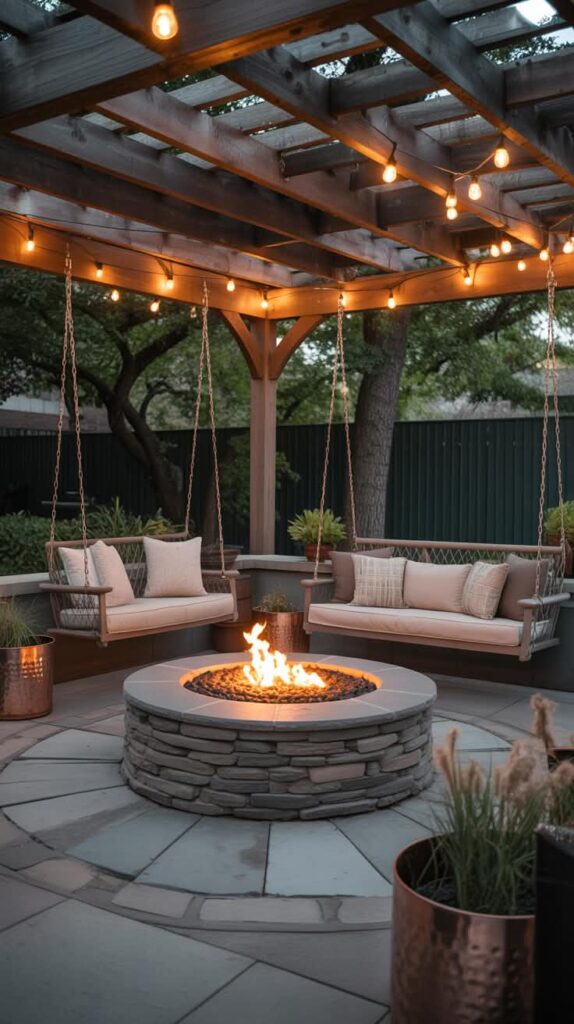
13) One-Day Kit Build
Skill: Beginner • Cost: ~$350–$500 • Time: 3–5 hrs • Good for: No guesswork
- Pre-cut blocks + ring + instructions. Easy, fast, tidy.
- Pro tip: Buy extra base gravel and sand—kits often skimp.
- Upgrade: Style with matching chairs/blankets and a log holder for a magazine look.
14) Tire Rim Tower (Industrial)
Skill: Intermediate (cutting/grinding) • Cost: Free–$80 • Time: 3–4 hrs • Good for: Upcycled, vertical draft
- Stack two rims (car for small, truck for large). Smooth edges, add legs or base.
- Pro tip: Burn off any residual paint/grease outdoors before first use.
- Upgrade: Add a removable ash pan below.
15) Leftover Brick, Big Round Pit
Skill: Beginner • Cost: Free–$120 • Time: Half day • Good for: Large gatherings
- Making a generous diameter (40–48″) feels luxurious and safe.
- Pro tip: Use a string-and-stake compass to mark a perfect circle.
- Upgrade: Add a circular steel grill grate to convert to a cooking fire.
16) Simple Brick Centerpiece Pit
Skill: Beginner • Cost: Free–$100 • Time: 2–4 hrs • Good for: Budget showpiece
- Leave small gaps for airflow and surround with string lights + plants.
- Pro tip: Top with a removable metal cover to keep out rain.
- Upgrade: Create a radial pattern cap layer for visual interest.
17) Rustic Wheelbarrow Fire
Skill: Beginner • Cost: Free–$40 • Time: 1 hr • Good for: Farmhouse vibes
- Old steel wheelbarrow only (no plastic/wood). Center it on a stone pad.
- Pro tip: Add fire brick inside to protect the metal and keep heat even.
- Upgrade: Paint exterior with high-heat matte black.
18) Concrete Tree-Ring Stack
Skill: Beginner • Cost: <$50 • Time: 2–3 hrs • Good for: Fast, modular
- Stack concrete tree rings; line interior with fire brick or use a ring.
- Pro tip: Mix ring colors/textures for an intentional look.
- Upgrade: Top with a circular stone cap.
19) Quick-Start Steel Fire Ring
Skill: Beginner • Cost: $40–$120 • Time: 1–2 hrs • Good for: Renters, test runs
- Clear a circle, add sand/pebbles, set the galvanized ring—you’re done.
- Pro tip: Choose laser-cut patterns for airflow and style.
- Upgrade: Set the ring inside a small paver surround.
20) Cinder Block Cap Square
Skill: Beginner • Cost: $60–$150 • Time: 2–3 hrs • Good for: Contemporary, flexible size
- Build with cap blocks for clean lines; line interior with fire ring to extend life.
- Pro tip: Back-butter caps with construction adhesive for stability (outer faces only).
- Upgrade: Inlay a contrasting cap on top course.
21) Asymmetrical Windbreak Wall
Skill: Intermediate • Cost: $80–$220 • Time: 4–6 hrs • Good for: Windy sites
- Stack blocks higher on one side to shield the flame and create sculpture.
- Pro tip: Step the wall gradually; maintain vent gaps at the base.
- Upgrade: Incorporate seating height along the high side.
22) Fire Pit Area Makeover (Paint + Mulch)
Skill: Beginner • Cost: $120–$300 • Time: Weekend • Good for: Instant transformation
- Refresh with painted Adirondack chairs, add mulch or gravel, and reset a simple metal ring.
- Pro tip: Use landscape edging to contain mulch neatly.
- Upgrade: Add a solar path light ring for nighttime glow.
23) Corner Brick Patio + Pit
Skill: Intermediate • Cost: $250–$600 • Time: Weekend+ • Good for: Small yards
- Turn an unused corner into a cozy brick patio with a compact pit.
- Pro tip: Lay bricks on a compacted base with polymeric sand to lock joints.
- Upgrade: Install a vertical log rack and a bright chair color pop.
24) Folded Steel Sheet Pit (Geometric)
Skill: Advanced (cutting/bending) • Cost: $120–$250 • Time: Weekend • Good for: Modern art vibe
- Cut V-notches in a checker plate, fold into a sculptural bowl, weld/seal seams.
- Pro tip: Deburr edges; prime and coat with high-heat paint.
- Upgrade: Add bolt-on legs or a cross-base for stability.
25) Tiny Tabletop Fire Bowl
Skill: Beginner • Cost: $20–$60 • Time: 1 hr • Good for: Balconies, ambiance only
- Faux-stone bowl + sand/rocks + gel fuel canister. Pretty and portable.
- Pro tip: Never leave unattended; keep away from curtains/awnings.
- Upgrade: Create a matching trio at varied heights.
26) Retaining Wall Block Pit (4-ft Cohesive Look)
Skill: Beginner • Cost: <$200 • Time: 3–4 hrs • Good for: Tying into existing hardscape
- Use the same block as your yard’s retaining walls for a designer, cohesive feel.
- Pro tip: Dry-fit a true 48″ outer diameter and confirm seating clearances.
- Upgrade: Add a rotating grill grate or swing-arm for cooking.
Step-by-Step: The Universal Fire Pit Build (Template You Can Apply to Most Designs)
- Mark & Measure
- Stake the center, tie a string to desired radius, trace circle with marking paint.
- Excavate & Level
- Remove sod to 2–3 in. depth (deeper for in-ground). Level and compact soil.
- Base Layer
- Add 2–3 in. of crushed stone, compact. Top with 1 in. leveling sand, screed flat.
- Dry Fit the First Course
- Set your first ring of blocks/pavers; check level across and adjust.
- Add Liner
- Drop in a steel fire ring or lay fire brick to protect masonry.
- Build Up Courses
- Stagger joints; lightly adhere outer faces with masonry adhesive if desired.
- Backfill & Surround
- Fill outside with gravel or pavers to create a clean safety zone.
- Finish & Protect
- Add spark screen, metal lid, and a grill grate if cooking. Keep an extinguisher nearby.
Fuel 101: Wood, Smokeless, or Gas?
- Wood: Classic crackle and aroma. Choose seasoned hardwood, store dry.
- “Smokeless” designs: Double-walled pits improve airflow to reduce visible smoke—still wood-fueled.
- Propane/Natural Gas: Clean, instant-on. Requires CSA-rated burners, media (lava rock/fire glass), and strict clearances. Great under pergolas with proper ventilation.
Design Like a Pro: Layout & Lifestyle Tips
- Seating ring: Plan a 6–8 ft diameter around the pit for chairs and legroom.
- Layer lighting: Path lights + string lights + lanterns = cozy + safe.
- Wind & views: Angle seating to block prevailing wind and face your best view.
- Storage: Side table with weatherproof bin for blankets, skewers, and games.
- Season extender: Add a patio heater or throw basket to enjoy shoulder seasons.
FAQ (Expanded)
What’s the cheapest DIY fire pit?
Repurposed options—washing machine drum, salvaged brick, tire rims, or tree rings—often land under $60.
How deep should an in-ground pit be?
Aim for 6–12 in. pit cavity plus a drain layer (gravel). Many DIYers go 12–14 in. total for wind protection.
What goes at the bottom?
A non-combustible base: sand, gravel, fire brick on edge with fire clay mortar, or a steel insert.
Can I put a fire pit on a deck?
Only with deck-safe stands/heat shields and strict clearances; gas is safer than wood. Always follow manufacturer guidance and local codes.
How big should the pit be?
Common inner diameter: 30–36 in. Cozy group hang: 36–42 in. Large spaces: 48 in. or more.
How do I reduce smoke?
Burn seasoned hardwood, avoid softwoods & trash, and don’t overfill. Consider a double-wall insert for improved airflow.
Final Thoughts: Build Once, Enjoy for Years
A fire pit is more than a project—it’s a memory machine. From budget-friendly pavers to sculptural steel, there’s a path here for every skill level and style. Start simple, prioritize safety, and add upgrades over time—benches, lighting, grilling grates, even a matching patio. The magic is in creating a spot that pulls people together.
🔥 Which build are you leaning toward—the $50 paver quick-start, the salvaged brick classic, or the industrial drum glow? If you want, tell me your yard size and vibe, and I’ll sketch a custom layout with a materials checklist you can take to the store.