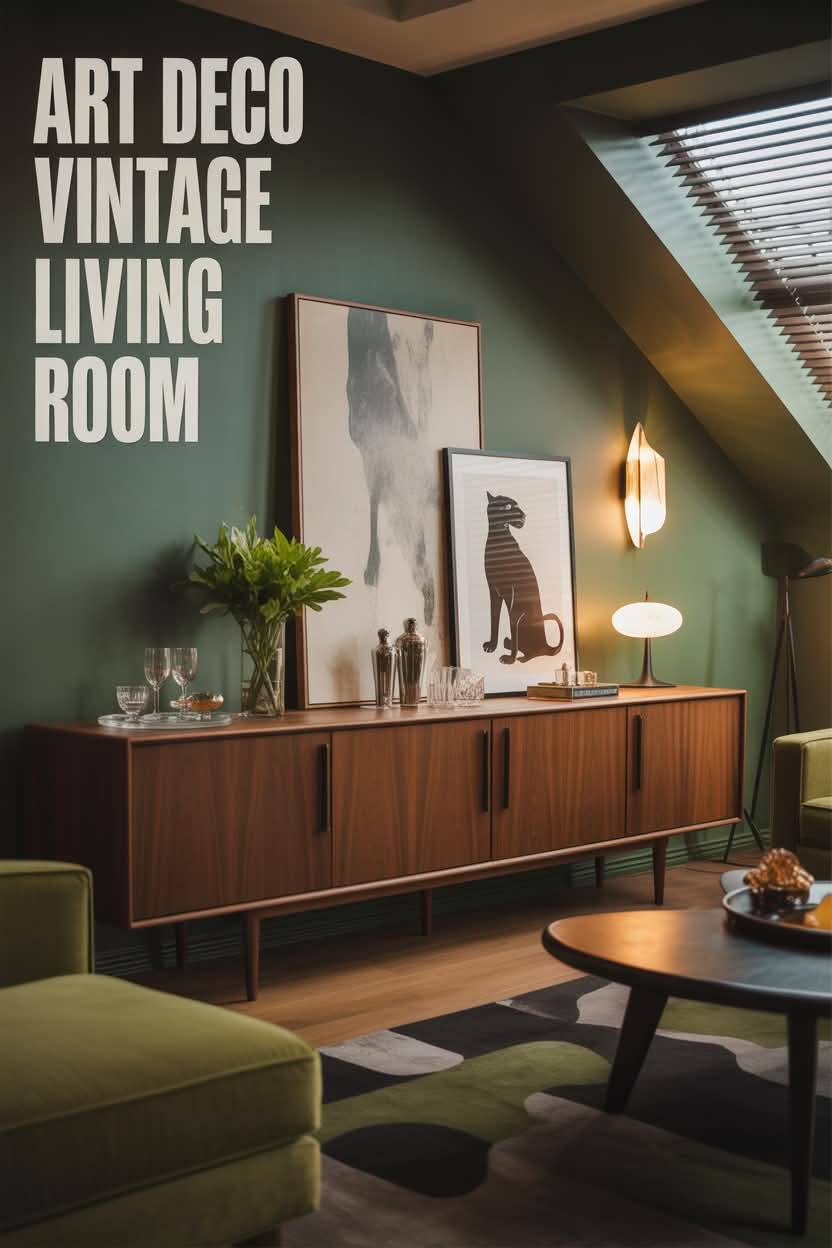
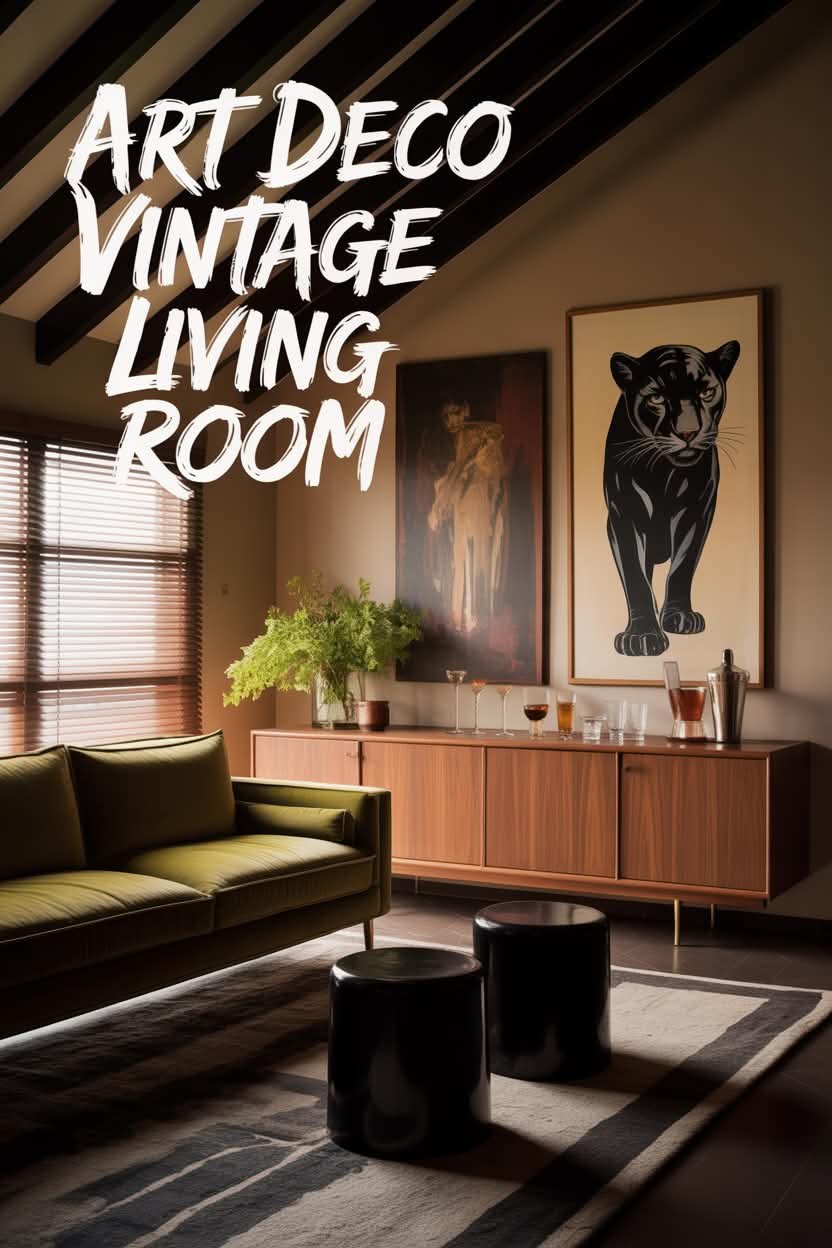
Step into the glamour of the 1920s and 30s with these 40 Art Deco living room design ideas. From bold geometry to mirrored surfaces, velvet sofas, and chandeliers, discover how to bring vintage luxury into your home.
Why Art Deco Still Captivates
The Art Deco movement flourished between the 1920s and 30s, a period marked by prosperity, innovation, and unapologetic indulgence. It was the age of flappers, jazz, cinema, and skyscrapers—and interiors reflected that same energy.
In living rooms, Art Deco translates to bold geometry, luxury materials, symmetry, and drama. It’s glamorous but not gaudy, vintage but still modern, and timeless enough to look stylish a century later.
If you’re ready to infuse your home with this irresistible aesthetic, let’s dive into 40 core Art Deco living room design ideas and how to use them today.
1. Geometric Patterns
Geometry is the backbone of Art Deco. Angular patterns like zigzags, chevrons, diamonds, and triangles appeared everywhere—from wallpaper to flooring to furniture inlays.
💡 How to use it: Add a chevron-patterned rug to ground your space, or wallpaper with bold geometric motifs behind your sofa.
2. Sunburst Motifs
The sunburst symbolizes optimism and modernity—two defining features of the Art Deco era. You’ll see it in mirrors, headboards, clocks, and even chandeliers.
💡 Styling tip: A sunburst mirror above a fireplace is an instant Deco hallmark.
3. Chrome & Glass Furniture
Chrome frames with glass tops were the epitome of sleek sophistication. They reflect light and add glamour without heaviness.
💡 How to use it: Opt for a chrome coffee table with a glass top or sleek console tables in reflective finishes.
4. Velvet Upholstery
Art Deco interiors embraced richness, and velvet epitomizes that lush quality. Jewel tones like emerald green or sapphire blue feel especially authentic.
💡 How to use it: Choose a velvet sofa as the centerpiece or add velvet accent chairs with gold legs.
5. Mirrored Surfaces
Mirrors weren’t just practical—they were decorative. Mirrored furniture or wall panels amplify glamour and light.
💡 How to use it: Incorporate mirrored side tables or a console with mirror detailing to reflect light and expand the space visually.
6. High Gloss Lacquer
Glossy finishes in black, ivory, or bold hues gave furniture a modern, polished look.
💡 How to use it: Add a lacquer cocktail cabinet or sideboard for instant Deco chic.
7. Bold, Streamlined Shapes
Furniture embraced clean lines and bold silhouettes—curved club chairs, rectangular tables, and sleek sideboards.
💡 How to use it: Keep furniture shapes simple but make them statement-worthy with luxurious finishes.
8. Metallic Accents
Gold, silver, brass, and chrome were used lavishly to add sparkle. Lighting, hardware, and trims often carried metallic details.
💡 How to use it: A gold floor lamp or chrome chandelier adds an Art Deco focal point.
9. Black & White Flooring
Checkerboard tiles or bold geometric patterns in black and white made dramatic statements underfoot.
💡 How to use it: Try checkerboard vinyl tiles for a budget-friendly update or geometric rugs for a softer option.
10. Symmetry in Layout
Balance was central to Art Deco design. Rooms felt orderly, harmonious, and grand thanks to symmetrical arrangements.
💡 How to use it: Place matching armchairs on either side of a sofa, or flank a fireplace with identical lamps.
11. Stained Glass
Art Deco stained glass featured angular designs in muted yet bold colors. It brought artistry and light diffusion to interiors.
💡 How to use it: Install stained glass panels in doors or windows or opt for lampshades with stained motifs.
12. Zigzag Motifs
Zigzags symbolize energy and movement, capturing the roaring spirit of the 1920s.
💡 How to use it: Incorporate zigzag cushions, rugs, or backsplash tiles for Deco-inspired flair.
13. Tiered & Stepped Designs
Inspired by skyscrapers, tiered designs echoed the stepped architecture of the time.
💡 How to use it: Choose tiered side tables, bookcases, or chandeliers for architectural drama.
14. Bold Color Palettes
Deep jewel tones defined the palette: emerald, sapphire, ruby, garnet, and amethyst, often paired with black, ivory, or gold.
💡 How to use it: Pick one bold color (like emerald green) and accent with metallics and neutrals.
15. Exotic Woods
Ebony, mahogany, and walnut were prized for their richness and depth.
💡 How to use it: Incorporate exotic wood coffee tables or paneling to ground your room in warmth.
16. Frosted Glass
Frosted glass offered a soft glow, often used in lamps and decorative accessories.
💡 How to use it: Replace standard bulbs with frosted glass globe lamps for a Deco nod.
17. Egyptian Influences
After King Tut’s tomb was discovered in 1922, Egyptian motifs—lotus flowers, pyramids, scarabs—became wildly popular.
💡 How to use it: Add Egyptian-inspired art or sculptural accents for subtle Deco flair.
18. Animal Prints
Decadence defined Art Deco, and animal prints (leopard, zebra, tiger) captured that exotic glamour.
💡 How to use it: Add a zebra rug or animal-print cushions for bold accents.
19. Ornate Chandeliers
Lighting was a centerpiece, often dramatic and geometric with glass, chrome, or crystal.
💡 How to use it: Install a tiered chandelier with glass prisms over your living room seating.
20. Sculptural Decor
Art Deco loved artistry in daily objects—bronze figurines, chrome sculptures, and decorative busts.
💡 How to use it: Style your shelves with bronze animal figures or chrome sculptures.
21. Marquetry Details
Inlaid wood designs added depth and craftsmanship to furniture and flooring.
💡 How to use it: Look for vintage sideboards or cabinets with marquetry designs.
22. Lacquer Boxes & Trays
Glossy decorative objects gave surfaces a refined finishing touch.
💡 How to use it: Use lacquer trays on coffee tables for drinks or books.
23. Abstract Art
Abstract art mirrored Deco’s bold, modern outlook.
💡 How to use it: Frame bold geometric art prints in metallic frames.
24. Leather Club Chairs
Streamlined leather chairs added masculine balance to plush velvet.
💡 How to use it: Pair a brown leather club chair with a velvet sofa for contrast.
25. Fan Shapes
Fans represented modernity and movement.
💡 How to use it: Add fan-back chairs or fan-patterned rugs for subtle Deco style.
26. Ivory or Bone Inlay
Furniture and accessories with inlaid ivory or bone showed off craftsmanship and luxury.
💡 How to use it: Use sparingly—a console with inlay can serve as a standout piece.
27. Shagreen Finishes
Stingray skin (or faux versions) added exotic texture.
💡 How to use it: Add a shagreen tray or box for small Deco details.
28. Skyscraper Forms
Furniture often mimicked skyscraper silhouettes with tiered, stepped designs.
💡 How to use it: Add a skyscraper-inspired bookshelf or lamp for architectural drama.
29. Bold Drapery
Heavy fabrics like velvet or silk framed windows with drama and grandeur.
💡 How to use it: Opt for floor-length curtains in jewel tones with metallic tiebacks.
30. Mosaic Tiles
Tiles weren’t just for floors—they decorated fireplaces and accent walls.
💡 How to use it: Add mosaic tile around your fireplace surround for Deco flair.
31. Art Deco Sculptures
Bronze or chrome figurines captured movement and elegance.
💡 How to use it: Display sculptural art on side tables or mantels.
32. Oriental Rugs
Rich, patterned rugs added warmth and layered luxury.
💡 How to use it: Place an oriental rug under modern furniture for a Deco-meets-classic blend.
33. Globe Lamps
Round, frosted glass globe lamps provided soft, ambient light.
💡 How to use it: Style matching globe lamps on side tables for symmetry.
34. Wall Sconces
Geometric sconces in chrome or frosted glass offered elegant mood lighting.
💡 How to use it: Install sconces in pairs for symmetry beside mirrors or fireplaces.
35. Tiffany Lamps
Stained glass Tiffany lamps added artistry and colorful flair.
💡 How to use it: Place one beside an Art Deco armchair to create a cozy reading nook.
36. Cocktail Cabinets
Social culture thrived in the 1920s, and cocktail cabinets were essential for entertaining.
💡 How to use it: Add a lacquered cabinet stocked with crystal glassware.
37. Vintage Radios & Gramophones
These weren’t just functional—they were showpieces of modernity.
💡 How to use it: Use a restored vintage radio as a conversational decor item.
38. Terrazzo Flooring
With chips of marble, quartz, or glass, terrazzo added sparkle and texture.
💡 How to use it: If flooring isn’t an option, try terrazzo-inspired side tables.
39. Bakelite Accessories
Bakelite was an early plastic used in decorative objects, hardware, and accessories.
💡 How to use it: Look for Bakelite clocks or trays to nod to vintage authenticity.
40. Statement Door Handles
Even hardware made a statement with chrome, brass, or geometric motifs.
💡 How to use it: Replace plain knobs with Art Deco-inspired handles to tie your space together.
Final Thoughts
An Art Deco living room is a bold, glamorous statement. Whether you embrace all 40 elements or introduce a few carefully chosen touches, the style brings sophistication, balance, and timeless appeal.
From velvet sofas and mirrored consoles to geometric rugs and dramatic chandeliers, Deco design continues to inspire interiors nearly a century later.
✨ Which element speaks to you most—sunburst mirrors, jewel-toned velvet, or bold terrazzo flooring?