

When I first decided to carve out a space for my book collection, I never imagined how much joy it would bring. What started as a simple shelf quickly grew into a personal retreat where stories come alive. Over time, I’ve learned that crafting a welcoming reading area isn’t just about stacking books—it’s about creating an experience.
Through trial and error, I discovered the magic of blending practicality with charm. My journey taught me that even small details matter: the warmth of layered lighting, the texture of a well-loved armchair, or the way sunlight dances across open pages. Every choice should whisper, “Stay awhile.”
In this guide, I’ll share the strategies that turned my cluttered corner into a sanctuary. You’ll learn how to maximize vertical space without sacrificing style and curate decor that reflects your unique taste. Whether you’re working with a spacious room or a compact nook, these tips will help you design a space that invites endless hours of reading bliss.
Key Takeaways
- Balance functional storage with decorative elements to elevate your space
- Personalize your design with textures and lighting that spark joy
- Optimize vertical layouts to showcase collections beautifully
- Prioritize comfort through seating choices and ergonomic details
- Use color schemes to create calming or energizing atmospheres
Setting the Scene: Embracing Cozy Library Aesthetics
I never realized how much my bookshelves could tell my story until I started organizing them by color. What began as a practical storage solution became the heartbeat of my home library – a living canvas where literature meets design.
The Charm of a Well-Curated Book Collection
My secret? Treating books as both treasures and decor. I arrange spines in gradient hues, creating sunset-like transitions from crimson to cream. This approach turns shelves into art installations while keeping favorite novels within reach.
Mixing vintage finds with contemporary covers adds depth to displays. I’ll pair a weathered Dickens volume with sleek modern poetry editions – the contrast sparks conversations before a single page is turned.
Creating an Inviting Atmosphere with Ambient Decor
Lighting makes all the difference. I use three layers:
| Light Type | Purpose | Example |
|---|---|---|
| Task | Reading clarity | Adjustable desk lamp |
| Ambient | Overall warmth | Dimmed wall sconces |
| Accent | Visual interest | Mini spotlight on art |
Textured throws and leather-bound journals complete the vibe. Every element serves dual purposes – that embroidered pillow isn’t just cozy, it’s hiding a charging station for my e-reader. True comfort means never choosing between form and function.
Top Library Aesthetic Ideas for a Cozy Reading Nook
There’s something magical about how sunlight and shelves can turn a corner into a storybook escape. My journey to perfecting this balance led me to two game-changing concepts that transformed my space from ordinary to extraordinary.
Floor-to-Ceiling Bookshelves and Display Ideas
I’ll never forget walking into a friend’s West Village apartment and gasping at their double-height bookcase – a direct nod to Nate Berkus’s iconic design. That moment sparked my obsession with vertical storage. Symmetrical square alcoves now frame my color-sorted collection, creating rhythm that turns every wall into a living gallery.

What makes these bookshelves sing? Strategic breaks for pottery and trailing plants. I alternate horizontal stacks with vertical spines, adding depth while keeping favorites at eye level. The secret sauce? Leaving one cubby empty – because sometimes space speaks louder than stuff.
Designing a Window Nook with Natural Light
Stephanie Sabbe’s genius window framing changed everything for me. I replicated her approach by building bookcases around my bay window, creating a sunlit perch that doubles as storage. Morning light dances across pages here, while evenings get a warm glow from nearby sconces.
My cushioned bench wears blush velvet – soft enough for marathon reads, sturdy enough for book club gatherings. Below-seat drawers hide blankets, proving that practical can be pretty. When afternoon rays hit just right? That’s when my reading nook becomes pure magic.
Creating an Intellectual Oasis with Librarycore Style
Discovering librarycore felt like uncovering a secret language of comfort and curiosity. This design philosophy transformed my bedroom corner into a sanctuary where every detail whispers “linger here.” It’s not just about books—it’s about crafting environments that cradle both thought and tranquility.
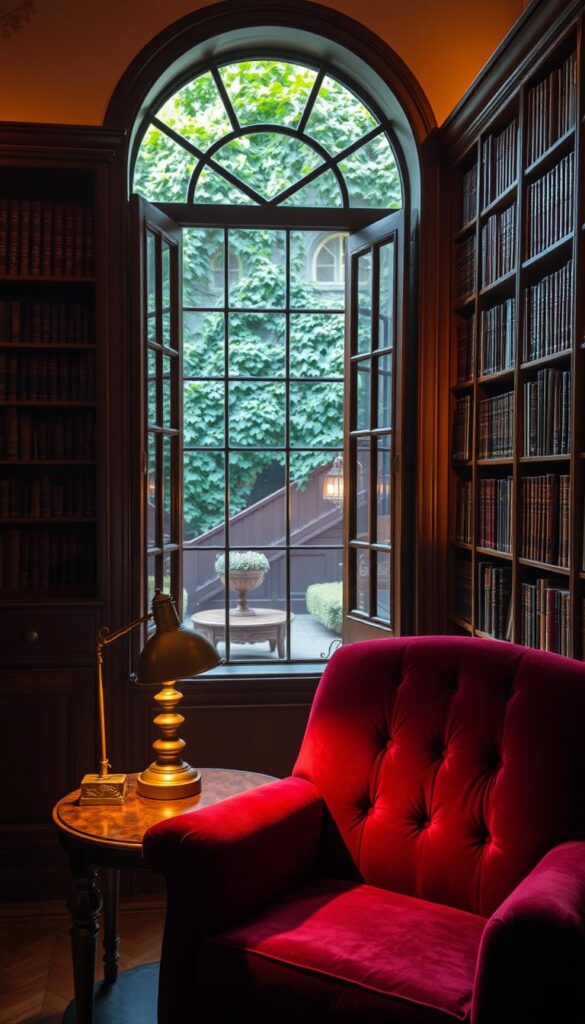
Celebrating Warm Lighting and Vintage Details
My love affair began with amber-toned bulbs in thrifted brass lamps. These golden pools of light mimic historic reading rooms while softening modern edges. I paired them with a cracked leather armchair that smells like wisdom—its creaks harmonizing with page turns.
The magic lies in layering eras. A 1920s library ladder leans against floating shelves holding contemporary memoirs. Faded green velvet drapes frame windows by day, becoming storybook curtains under moonlight. Every piece feels lived-in, like artifacts from countless imaginary adventures.
The Essence of a Quiet, Personal Library
True librarycore avoids stiff formality. My space balances scholarly vibes with snug comforts—a wool throw draped over that vintage chair, mahogany bookshelves housing both Proust and pizza-themed cookbooks. It’s where ideas marinate as slowly as my morning tea.
I’ve learned this style differs from dark academia’s brooding intensity. Instead of gothic arches, I use warm walnut tones and botanical prints. The result? A home library that invites both deep focus and lazy Sunday chapters. Here, knowledge isn’t intimidating—it’s curled up beside you, waiting to be rediscovered.
Designing Functional Spaces: Desk, Study, and More
I hit a wall when my reading nook became a cluttered catch-all. That’s when designer Drew McGuckin’s genius clicked for me – why separate work and leisure when they can coexist beautifully? His built-in desk concept became my blueprint for spaces that multitask harder than a barista during rush hour.
Incorporating Work Zones and Built-in Desks
My desk now lives snug between bookshelves, flanked by cabinets hiding printer cables and sticky note hoards. McGuckin’s approach taught me vertical integration – literally. The floating workspace saves floor space while keeping reference books at arm’s reach. “Good design solves two problems with one solution,” he told me during our chat – a mantra I repeat when planning any room.
Multifunctional Storage and Bookcase Solutions
Hidden compartments became my secret weapon. Deep drawers under seating nooks store blankets, while narrow pull-outs beside the desk organize pens and charging bricks. My favorite hack? Magnetic strips inside cabinet doors for scissors and page markers.
| Storage Type | Function | Space Saved |
|---|---|---|
| Floating shelves | Display + book storage | 18″ depth |
| Bench seating | Seating + linen storage | 9 sq ft |
| Rotating carousel | Corner book access | 27″ radius |
Lighting plays double duty too. My swing-arm lamp illuminates both keyboard and open novels, proving that functional design doesn’t mean sacrificing charm. Now when I’m hunting for that perfect quote or power cord, everything has its place – and the room still whispers “stay awhile.”
Mixing Vintage Treasures with Modern Design Elements
Walking through that Texas renovation by Fort Design Studio changed everything for me. Hilary Colia and Jennifer Kostohryz showed how empty shelves aren’t wasted space – they’re promises for future stories. Their eggplant-hued built-ins taught me to treat walls as evolving galleries where family photos mingle with thrifted curios.
Using Gold Accents and Statement Pieces
I’ll never forget how Sydney Manning’s gold frames made that moody room sing. Now I hunt for metallic touches that dance in lamplight – a gilded bookend here, brass sconces there. My favorite vintage clock sits beside sleek acrylic shelves, proving eras can coexist beautifully.
Dark walls became my canvas after that Texas inspiration. I layer matte black with amber-toned art, letting gold accents pop like exclamation points. Even my grandmother’s tarnished picture frames got new life after a rub with guilding wax.
The secret? Leave breathing room. Those empty shelves aren’t just for growing collections – they let each design element shine. My home library now feels curated, not cluttered, with every golden detail whispering stories yet to come.