

My love for books started small, but over time, my collection grew beyond shelves. Now, I own over 300 art and design books, each holding a special place in my heart. There’s something magical about holding a physical book—the texture, the scent, the way it ages gracefully.
Soon, my antique oak table became overflow storage for design tomes. I needed creative solutions to keep my space organized yet stylish. That’s when I discovered timeless ways to blend function and charm.
Whether you live in a cozy apartment or a spacious house, these ideas adapt beautifully. They transformed my cluttered corners into a curated sanctuary. Let me share how you can achieve the same elegant look.
Key Takeaways
- Personal book collections can quickly outgrow standard storage.
- Physical books offer a unique sensory experience digital can’t match.
- Creative solutions work for any home size or layout.
- Antique furniture can double as stylish book storage.
- A well-organized library adds character to your space.
Why a Vintage Library? My Love Affair with Classic Bookshelves
Books have a way of multiplying when you're not looking, and mine staged a quiet takeover. My weekly Thriftbooks deliveries turned into a tower of unread treasures, and soon, my IKEA shelves waved a white flag. That’s when I realized: I needed a home library that could keep up.
When My Collection Needed a Bigger Boat
Designer Nate Berkus once transformed a stairwell into a book nook, and I took notes. My studio’s cold metal shelves felt sterile compared to the rich grain of antique oak. Leather-bound classics deserve a stage, not just storage. Last year, custom built-ins added 40% more space—finally, breathing room for my 300+ art books.
The Warmth of Wood vs. Modern Metals
Vintage bookcases don’t just hold a collection; they tell its story. Modern designs felt like a hospital for my well-loved tomes. But weathered wood? It whispers history. In my last house, I swapped chrome for mahogany—suddenly, every shelf felt like a hug.
My Top 12 Vintage Library Ideas for Timeless Charm
Every book lover reaches a tipping point where storage becomes an art form. Here’s how I transformed clutter into curated beauty.
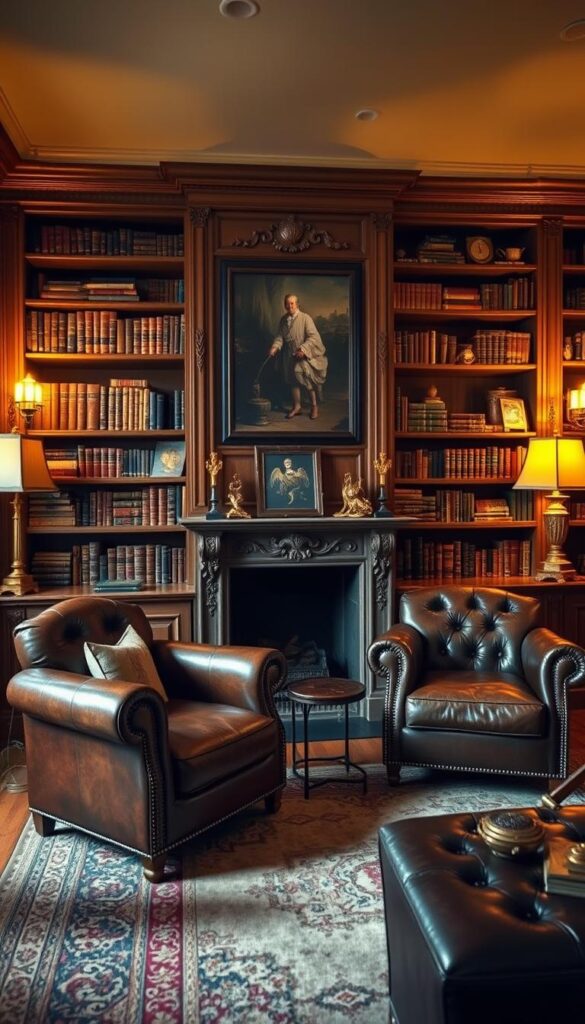
Go Floor-to-Ceiling with Custom Bookcases
Heather Talbert’s double-height bookshelves inspired my teal Farrow & Ball built-ins. Designer Gina Sims taught me bold hues make spines pop. Eggplant-stained shelves now frame family photos like Fort Design Studio’s iconic work.
Carve Out a Cozy Window Nook
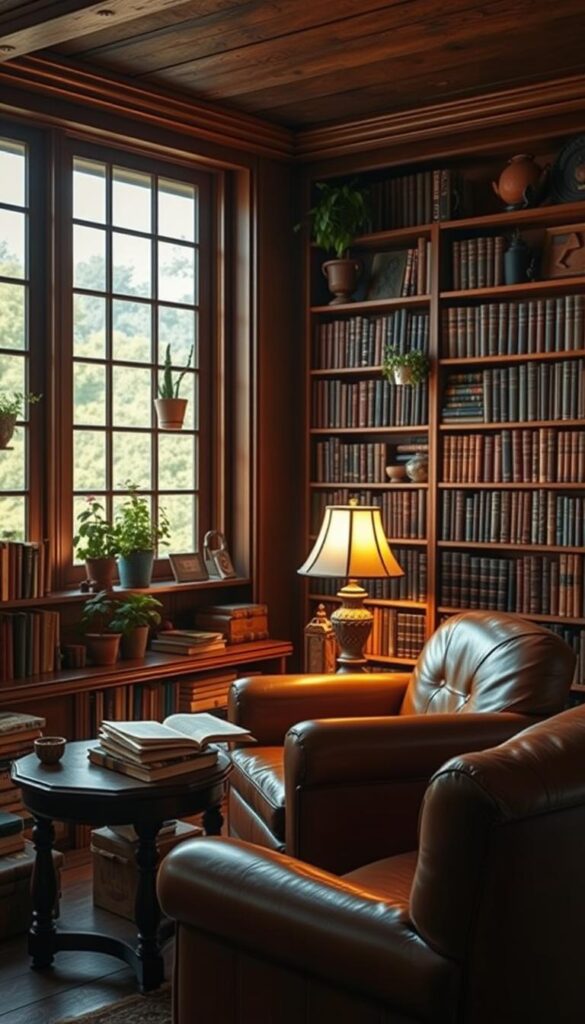
Stephanie Sabbe’s built-in seating proved a window nook maximizes light—ideal for book clubs! I added linen cushions and a brass lamp for golden-hour reading. Natural light highlights my color-coded stacks, just like a West Village townhome.
Mix Vintage Treasures with Your Books
Marie Flanigan’s brass-accented shelves motivated my flea market hunts. I display antique globes and leather bookends between novels.
“A home library should feel collected, not cataloged,”
says designer Nate Berkus. My space now whispers history.
- Design tip: Paint built-ins in moody tones for depth.
- Small-space hack: Use floating shelves above seating.
- Pro trick: Group books by height for visual rhythm.
Transform Unused Spaces into Literary Retreats
Empty corners and narrow hallways became my secret weapons for book storage. When my home ran out of wall space, I turned to overlooked areas—each one a chance to create a tiny library.
Hallways That Double as Book Galleries
My 18-inch landing now holds IKEA Billy shelves, hacked to fit like CeCe Barfield Thompson’s Bath conversion. Narrow spaces force creativity: staggered heights for paperbacks, ledges for art books. Even my Manhattan friend’s dining room became a literary hub—dark green shelves framing her table.
Under-Stair Shelves for Awkward Corners
That dead space beneath my staircase? Custom shelves now house 75+ volumes. Designer Sherrell Neal’s trick: alternate books with memorabilia for rhythm. Pro tip: Use moisture-absorbing packets in basement nooks to protect pages.
“A well-placed shelf turns wasted square footage into a story,”
says a Brooklyn architect I admire. My apartment proves it—every inch now celebrates books.
Paint & Palette: Choosing Vintage-Inspired Colors
Color can make or break a home library—I learned this the hard way. My first attempt with millennial pink shelves felt trendy but clashed with my leather-bound classics. Then, Farrow & Ball’s ‘Hague Blue’ transformed my walls into a moody backdrop that made every book pop.
Moody Blues and Greens for Old-World Elegance
Deep shades like Benjamin Moore’s ‘Hunter Green’ add instant depth. I used it on trim to frame my shelves, inspired by a Parisian pied-à-terre’s glass cabinets. Dark hues create intimacy, especially in small spaces.
Why I Adore Teal Bookcases (and How to Style Them)
Farrow & Ball’s ‘Vardo’ teal became my signature shade. Paired with brass hardware (à la Marie Flanigan Interiors), it feels luxe yet cozy. Pro tip: Test sample pots on shelf backs first—light changes everything.
| Paint Brand | Shade | Best For |
|---|---|---|
| Farrow & Ball | Vardo | Statement shelves |
| Benjamin Moore | Hunter Green | Trim/accents |
| Sherwin-Williams | Inky Blue | Small nooks |
Gold accents, like Sydney Manning’s shelves, warm up cool tones. My teal bookcases now feel timeless—proof that bold color choices pay off.
Furniture Finds: The Perfect Vintage Seating
Comfort meets character when vintage seating enters the picture. My house felt incomplete until I paired books with chairs that invited lingering. The right pieces turn shelves into destinations—not just storage.
Scouring Flea Markets for Leather Armchairs
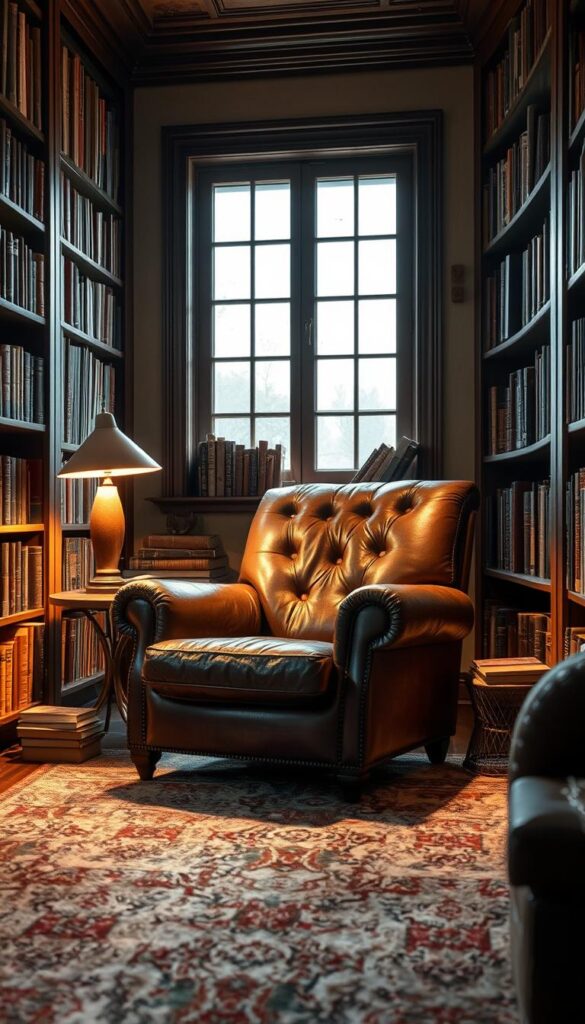
I learned the value of patience hunting for broken-in leather. My $75 Craigslist Chesterfield had cracked seams but perfect patina. Designer Garrow Kedigian’s Paris Flea Market tips saved me:
- Check for solid wood frames under upholstery
- Minor scuffs add charm—major tears need pros
- Condition leather monthly with beeswax products
Anthropologie’s wooden armchair now anchors my reading nook. Its curved back supports hours of browsing art books.
Pairing Mid-Century Desks with Wooden Shelves
My antique oak table balances Drew McGuckin’s workspace design. Floating shelves above keep reference books within reach. This office-library hybrid works because:
“Mixed eras create depth when anchored by consistent materials,”
says a Mid-Century Modern dealer I admire. My 1970s Danish swivel chair got new life with emerald velvet—proof that reupholstering transforms room dynamics.
Lighting That Sets the Mood
The right lighting transformed my book collection from stored objects to displayed treasures. Overhead fluorescents made my home library feel sterile until I discovered layered illumination. Now, every reading session feels like a curated experience.
Brass Sconces for a Golden-Hour Glow
Sydney Manning's brass fixtures inspired my hunt for warm metallic light. I found reproduction Art Nouveau sconces at a salvage shop—their patina catches sunset rays perfectly. Positioning matters: mine angle downward to prevent glare on glossy covers.

Budget-friendly alternative: I used dimmable LED strips behind crown molding for ambient glow. They're invisible but cast the perfect light for nighttime browsing. My swing-arm lamps provide adjustable morning reading spots too.
Picture Lights to Highlight Your Favorite Shelves
Nineandsixteen's gallery-style lighting taught me to treat shelves like art displays. Mini picture lights now spotlight my first editions without washing out colors. Pro tip: Warm 2700K bulbs maintain that antique look modern LEDs often lack.
“Lighting should guide the eye, not dominate the space,”
Here's how I balanced function and ambiance:
- Mixed overhead and task lighting for versatility
- Used frosted glass shades to soften direct beams
- Installed dimmers for adjustable brightness levels
Textures That Tell a Story
Texture transformed my space from ordinary to extraordinary—one layered detail at a time. What began with a Campbell-Rey x Nordic Knots rug evolved into a tactile symphony. Shavonda Gardner’s textile philosophy taught me: contrast creates character.
Choosing the Right Rug for Your Reading Space
Wool became my workhorse after testing seven materials. High-traffic zones demand durability—my 8×10 Persian-style rug handles daily foot traffic beautifully. For pattern mixing, I paired kilim motifs with William Morris florals. The key? Keeping one element subtle.
Layering Fabrics Like a Pro
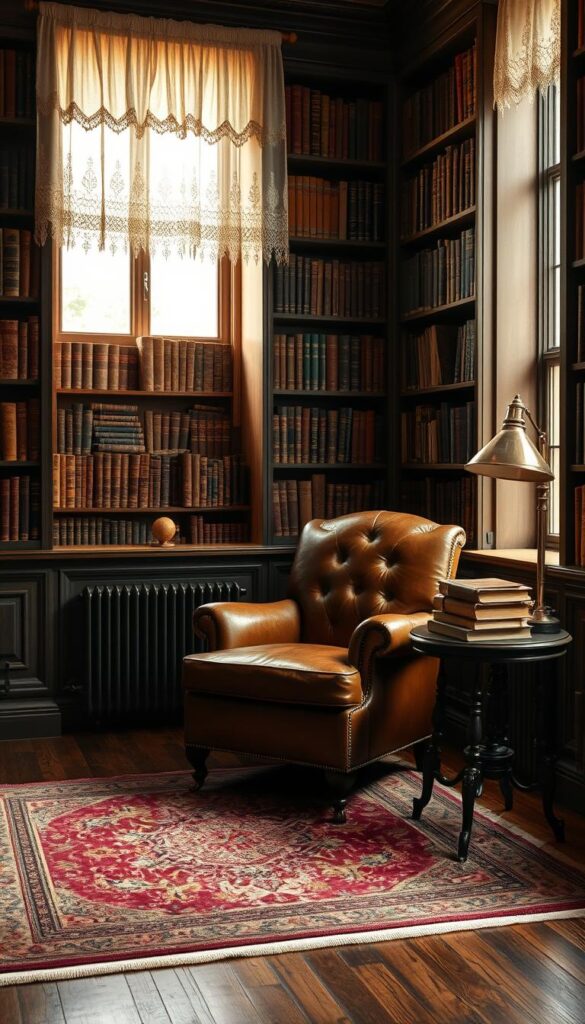
UV-filtering linen drapes protect my shelves while softening walls. Behind them? The IKEA cushion hack that fools everyone—$12 inserts in Schumacher-esque velvet covers. Design blogger Tawna Allred inspired my sound-dampening trick: a jute pad under the room’s wool carpet.
My texture formula balances practicality and style:
- 70% durable base (wool rugs, linen curtains)
- 20% luxury accents (velvet, leather bindings)
- 10% whimsy (embroidered throw pillows)
“Layered textures invite touch, which makes a space feel lived-in,”
says textile expert Shavonda Gardner. Now, every reading session engages multiple senses—the crunch of wool underfoot, the whisper of linen in the breeze.
Unexpected Twists on Traditional Libraries
Who says libraries can't have personality? Mine doubles as a cocktail lounge. Traditional shelves felt too serious until I spotted Anne McDonald’s English snug bar—a game-changer for my home library. Now, my books share space with crystal decanters and artisanal bitters.
Adding a Bar Cart for Cocktail-Hour Reading
My Prohibition-era cabinet conversion holds vintage Penguin covers and top-shelf gin. Designer Garrow Kedigian’s flea market hunts inspired the mix: leather-bound classics beside hand-blown glassware. The trick? Keeping spirits away from sunlight to protect my books.
Sherrell Neal’s sports displays taught me to curate shelves like galleries. Here’s how I balanced my collection with flair:
- Framed first editions under museum glass (no UV damage)
- Antique globes marking travel memoir sections
- Themed nooks for botanical books with dried fern accents
Displaying Sports Memorabilia or Travel Souvenirs
A signed baseball glove now anchors my Hemingway shelf. Pro tip: Group items by color for a polished look. My safari hat collection floats above a stack of explorer biographies—proof that libraries thrive on surprises.
“A great library reflects its owner’s passions, not just their reading list,”
says Neal. My space now celebrates both literature and life’s adventures.
Small-Space Solutions for Book Lovers
Living in a compact apartment taught me creative ways to showcase my growing book collection. Limited square footage became an opportunity to innovate rather than compromise. Melissa Colgan's vibrant purple library proved even tiny areas can make bold statements.
IKEA Hacks for Apartment-Friendly Libraries
My BESTÅ system got a luxe upgrade with added crown molding—now it looks custom-built. Floating shelves taught me hard lessons about weight limits after a paperback avalanche. Here's what works in tight spaces:
- Narrow 10″ depth units perfect for paperbacks
- Kallax cubes turned sideways for art book display
- Back-painted bookcases doubling as privacy screens
Billy bookcases became room anchors when I stacked them vertically. The secret? Securing them properly to avoid tip-over disasters in my rental.
Bookcases That Do Double Duty
In my 500-square-foot home, every piece must earn its keep. A low bookcase now divides my living and sleeping areas while providing essential storage. The open-back design maintains light flow—a trick I learned from Tokyo micro-apartment tours.
For visual separation without closing off the space, I alternate books with plants and framed art. This creates rhythm while keeping the area feeling airy. My most functional hack? Using a shallow bookcase as both room divider and bedside table.
“In small spaces, vertical storage is your best friend,”
says a Manhattan designer I follow. My floor-to-ceiling units now hold three times more books than my old horizontal arrangement.
Conclusion: Building Your Own Vintage Sanctuary
Three years ago, my books were piled on every surface—now they live in a sanctuary I designed. This home library became more than storage; it’s where I learn, unwind, and find daily inspiration. Physical pages remind me that knowledge isn’t just consumed—it’s collected and cherished.
Here’s what my journey taught me: Start small. A single vintage armchair can anchor your space. Leave 20% shelf space for growth—your collection will thank you later. Most importantly, let your shelves reflect who you are.
Share your own literary haven with #VintageBookMagic. Every shelf tells a story—what will yours say?